
Your air conditioner may be working properly, but that doesn’t mean all the cooled air it produces is reaching the rooms in your home.
Leaky air ducts can allow conditioned air to escape before it reaches your living spaces. In Arizona, where ductwork often runs through extremely hot attics, that wasted cooling can contribute to higher electricity consumption and uncomfortable rooms.
Duct leakage can also affect airflow and pressure throughout the home.
If your AC seems to run longer than expected, certain rooms remain warm, or electricity use has increased without an obvious explanation, your ductwork may deserve attention.
What Are Leaky Air Ducts?
Air ducts are the passages that distribute conditioned air throughout your home.
A typical central HVAC system uses supply ducts to deliver cooled air and return ducts to carry indoor air back to the equipment.
Duct leakage occurs when air escapes or enters through unintended openings.
Common problem areas can include:
- Disconnected duct sections
- Poorly sealed joints
- Damaged flexible ducts
- Deteriorated connections
- Gaps around duct boots
- Improperly sealed plenums
- Damage from previous work or aging materials
Some leakage may be difficult to identify without professional testing.
How Do Duct Leaks Waste Electricity?
Imagine your air conditioner cools air to distribute throughout the home.
If some of that air escapes into the attic before reaching the intended rooms, the HVAC system has used electricity to produce cooling that isn’t fully benefiting the occupied space.
The thermostat may continue calling for cooling because the home is not reaching the desired temperature. This can contribute to longer operating periods and greater electricity consumption.
Return-side duct leaks can create additional problems by drawing hot attic air or other unconditioned air into the system.
Why Are Attic Duct Leaks Especially Problematic in Arizona?
Arizona attics can become extremely hot during summer. When conditioned air leaks into an unconditioned attic, the energy used to cool that air is largely wasted.
Likewise, return ducts that draw hot attic air into the system can increase cooling demand.
Duct insulation also matters. Even ducts without major leaks can gain heat when they run through hot spaces and lack adequate insulation.
That is why duct sealing and duct insulation are related but distinct improvements.
What Are the Signs of Leaky Air Ducts?
Duct leakage does not always produce an obvious noise or visible opening.
Potential warning signs include:
Uneven Room Temperatures
Some rooms may receive less conditioned air than others.
Weak Airflow From Certain Vents
Air escaping through damaged or disconnected ducts may reduce delivery to particular rooms.
Long AC Cooling Cycles
The system may operate longer because less useful cooling reaches the living space.
Unexpectedly High Electricity Consumption
Cooling losses may increase the amount of energy needed to maintain comfort.
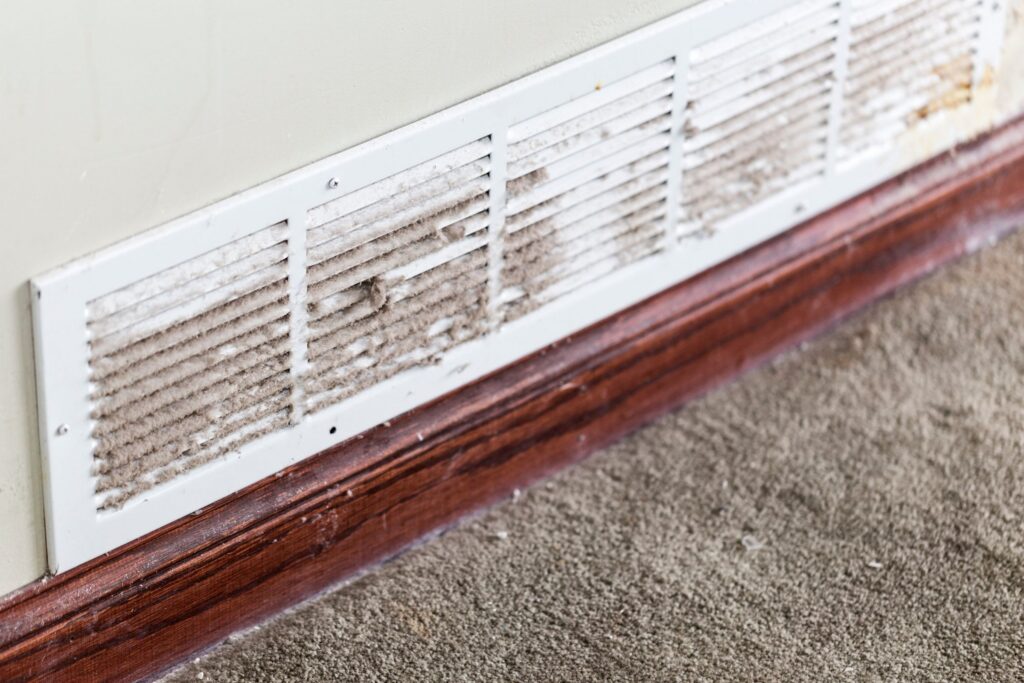
Dust Problems
Certain return-side leaks may draw dust or particles from unconditioned spaces into the airflow.
None of these symptoms proves duct leakage on its own. Equipment problems, insulation deficiencies, airflow restrictions, and other issues can produce similar results.
Can Duct Leaks Cause One Room to Be Hotter Than Another?
Yes. If a branch duct serving one room is damaged or disconnected, that room may receive less conditioned air.
However, uneven cooling can also result from:
- Window exposure
- Insulation differences
- Duct design
- Airflow balancing
- Blocked vents
- Room layout
- HVAC sizing
A professional evaluation should identify the actual cause rather than assuming every warm room has a duct leak.
How Are Air Duct Leaks Found?
Some duct problems can be identified visually. Others require testing.
Depending on the situation, a qualified professional may inspect accessible ductwork, evaluate airflow, examine connections, or use specialized testing methods.
The goal is to determine whether leakage is present, where it occurs, and whether correcting it is likely to improve performance.
A general AC repair evaluation can also help rule out equipment-related causes of poor cooling.
Can You Seal Air Ducts Yourself?
Some accessible, minor sealing tasks may be manageable for homeowners with appropriate guidance.
However, ductwork in attics, concealed spaces, or difficult-to-reach areas can present safety and access concerns.
Professional evaluation is especially useful when:
- Ducts are disconnected
- Flexible ducts are damaged
- Large sections require repair
- Airflow is substantially reduced
- Multiple rooms are affected
- The system has significant pressure or distribution problems
Ordinary cloth duct tape is not a reliable long-term duct-sealing solution.
Appropriate HVAC-rated materials and installation methods are important.
Does Duct Sealing Always Lower Electric Bills?
Not necessarily by a fixed amount.
The savings depend on:
- How much leakage exists
- Where the leakage occurs
- Whether ducts run through conditioned or unconditioned spaces
- Cooling demand
- Equipment performance
- The quality of the repair
A home with major attic duct leakage may have more opportunity for improvement than a home with already well-sealed ductwork.
Measured results are more useful than universal savings promises.
What Is the Difference Between Duct Sealing and Duct Insulation?
Duct sealing addresses unintended air leakage.
Duct insulation reduces heat transfer between the air inside the duct and the surrounding environment.
Both can matter in Arizona.
For example, a properly sealed duct running through a very hot attic may still gain heat if it is poorly insulated.
Likewise, a well-insulated duct can still waste cooled air if its connections are leaking.
An effective evaluation considers both conditions.
Could the Problem Be My AC Instead of My Ducts?
It definitely can be the underlying problem. Weak cooling and long operating cycles can also be caused by dirty coils, refrigerant problems, blower issues, or other equipment conditions.
That is why it’s important to evaluate the HVAC system as a whole.
Professional AC maintenance can help identify equipment performance concerns, while additional ductwork assessment may be appropriate when distribution problems remain.
Should You Check Ductwork Before Replacing Your AC?
Yes, particularly if the existing home has persistent airflow or temperature-distribution problems.
Installing a new air conditioner does not automatically correct damaged, leaking, or poorly designed ductwork.
A replacement project is an opportunity to evaluate how the new equipment will work with the existing distribution system.
Worlock’s AC installation services can help homeowners plan equipment upgrades with attention to overall system performance.
Improve Cooling Performance Before Paying for More Electricity
Leaky ductwork can make your air conditioner work harder without delivering the comfort you expect.
The first step is determining whether duct leakage, equipment performance, insulation, or another condition is responsible.
Worlock Air Conditioning & Heating serves homeowners throughout Peoria, Phoenix, Scottsdale, Glendale, Surprise, Sun City, Sun City West, Youngtown, El Mirage, Litchfield Park, and surrounding Valley communities.
Contact Worlock Air to discuss airflow and cooling-performance concerns.
Frequently Asked Questions
Can leaky air ducts increase my electric bill?
Yes. Duct leaks can allow cooled air to escape or hot unconditioned air to enter the system, potentially increasing the energy required to cool your home.
How do I know if my air ducts are leaking?
Possible signs include uneven cooling, weak airflow, long AC cycles, and unexpectedly high electricity use. Professional inspection or testing may be needed to confirm leakage.
Is duct sealing worth it in Arizona?
It may be, especially when ducts leak into hot attics or other unconditioned spaces. The benefit depends on the severity and location of the leakage.
Can leaking ducts make my AC run constantly?
They can contribute to longer cooling cycles by reducing effective cooling delivery. Constant operation can also have other causes that should be evaluated.
Should I replace my AC if my ducts are leaking?
Not solely because of duct leakage. Duct problems may be repairable without replacing the air conditioner. Equipment replacement should be based on the system’s condition and overall needs.