When summer temperatures climb above 100°F in Phoenix and the surrounding Valley, keeping your home cool can become one of your biggest household expenses. Your air conditioner may operate for hours at a time, and even small inefficiencies can add up over an extended cooling season.
Fortunately, lowering your AC bill doesn’t always require replacing your air conditioner. Thermostat adjustments, better airflow, reduced indoor heat gain, and timely maintenance can all help reduce unnecessary electricity use.
Here are 10 practical ways Arizona homeowners can manage cooling costs without sacrificing reasonable indoor comfort.
1. Adjust Your Thermostat Without Sacrificing Comfort
Your thermostat setting has a direct impact on cooling demand.
The lower you set your thermostat during extreme heat, the harder your air conditioner generally needs to work to maintain that indoor temperature.
Consider choosing the highest comfortable setting when you’re home and raising it when the house will be unoccupied.
For some households, 78°F is a reasonable starting point during summer. Others may need a different setting based on comfort, health needs, and household circumstances.
The important part is finding a sustainable temperature rather than repeatedly lowering the thermostat whenever the home feels warm.
Does Turning the Thermostat Down Make Your AC Cool Faster?
For most conventional air conditioners, no.
Setting the thermostat to 65°F when the house is 80°F generally won’t make the system cool faster than setting it to 76°F.
Instead, it tells the equipment to continue cooling toward a much lower temperature.
If your AC cannot maintain a reasonable setting, professional AC repair may be more helpful than another thermostat adjustment.
2. Replace Dirty Air Filters
A dirty air filter can restrict airflow through your HVAC system.
When airflow becomes restricted, cooling performance may decline, and equipment may operate under unnecessary strain.
Arizona homeowners should inspect filters regularly, especially during dusty weather and periods of heavy AC use.
Replacement frequency depends on filter type, pets, household conditions, and manufacturer recommendations.
Use a filter appropriate for your HVAC system rather than assuming the most restrictive filter is always the best choice.
3. Keep Your Outdoor AC Unit Clear
Your outdoor air conditioner needs adequate airflow to release heat.
Leaves, dust, vegetation, and other debris can interfere with normal operation.
Homeowners can help by keeping loose debris and vegetation away from outdoor equipment.
Avoid opening equipment panels, handling electrical components, or attempting internal cleaning without proper training.
Professional AC maintenance can address coil condition, operating performance, and other maintenance needs.
4. Reduce Heat Coming Through Your Windows
Arizona sunlight can contribute substantial heat to indoor spaces, particularly through windows exposed to afternoon sun.
Closing blinds, using suitable shades, and reducing direct solar exposure can help limit cooling demand.
West-facing windows deserve particular attention during hot afternoons.
Exterior shading and appropriate window treatments may also help reduce unwanted heat gain.
These improvements allow your air conditioner to spend less energy removing heat that could have been prevented from entering.
5. Use Ceiling Fans Correctly
Ceiling fans can help people feel cooler by increasing air movement across the skin.
However, fans do not lower the room’s actual air temperature.
Use them in occupied rooms to improve comfort, and turn them off when nobody is there.
If a fan allows you to maintain comfort at a slightly higher thermostat setting, it may help reduce AC energy consumption.
6. Avoid Adding Unnecessary Heat Indoors
Ovens, stovetops, dryers, and other appliances can add heat to your home.
During the hottest parts of the day, consider reducing activities that generate significant indoor heat.
Simple changes include cooking outdoors when practical, using smaller cooking appliances, or shifting certain household tasks to cooler hours.
Every reduction in indoor heat gain can make your cooling system’s job a little easier.
7. Check for Air Leaks Around Your Home
Conditioned air can escape through gaps around doors, windows, and other openings.
At the same time, hot outdoor air can enter.
Weatherstripping and appropriate air sealing can help reduce unwanted air exchange.
Attic insulation and building-envelope improvements may also help your home retain comfortable temperatures.
For many Arizona properties, reducing heat gain is just as important as improving the efficiency of the cooling equipment itself.
8. Make Sure Your Ductwork Isn’t Wasting Cool Air
Ductwork carries conditioned air from your HVAC system to the rooms throughout your home.
Leaks or disconnected sections can allow cooled air to escape into attics and other unconditioned spaces.
This can lead to:
- Longer cooling cycles
- Uneven room temperatures
- Reduced airflow
- Higher electricity consumption
- Difficulty maintaining thermostat settings
If some rooms are consistently uncomfortable or your cooling costs seem unusually high, ductwork may deserve professional evaluation.
9. Schedule Professional AC Maintenance
An air conditioner can continue running while gradually losing performance.
Dirty coils, airflow restrictions, worn components, and other problems can reduce cooling efficiency.
Professional maintenance helps identify conditions that may be making your equipment work harder than necessary.
A maintenance visit cannot guarantee a particular reduction in your electric bill, but correcting genuine performance problems can help reduce avoidable energy waste.
For a seasonal schedule, see our Arizona HVAC maintenance calendar.
10. Know When an Energy-Efficient AC Upgrade Makes Sense
Not every high electric bill means you need a new air conditioner. However, an aging system that struggles to cool, requires frequent repairs, or operates inefficiently may eventually cost more to keep than expected.
Newer high-efficiency equipment can use less electricity to deliver comparable cooling, provided the system is properly sized and installed.
Before replacing equipment, consider:
- Current system age and condition
- Repair history
- Cooling performance
- Existing equipment efficiency
- New equipment cost
- Potential operating-cost savings
- How long you plan to stay in the home
Worlock Air provides AC replacement and AC installation services for Arizona homeowners evaluating an upgrade.
Why Are Arizona Summer Electric Bills So High?
Cooling demand increases substantially when outdoor temperatures remain extremely hot for extended periods.
Your electricity bill may also be affected by your utility’s rate plan, peak-hour pricing, household electricity use, and billing period.
That means a higher bill does not automatically indicate an inefficient air conditioner.
Before assuming your AC is responsible, compare your electricity usage with previous periods and consider changes in weather, occupancy, thermostat settings, and other household appliances.
Need Help Lowering Your Cooling Costs?
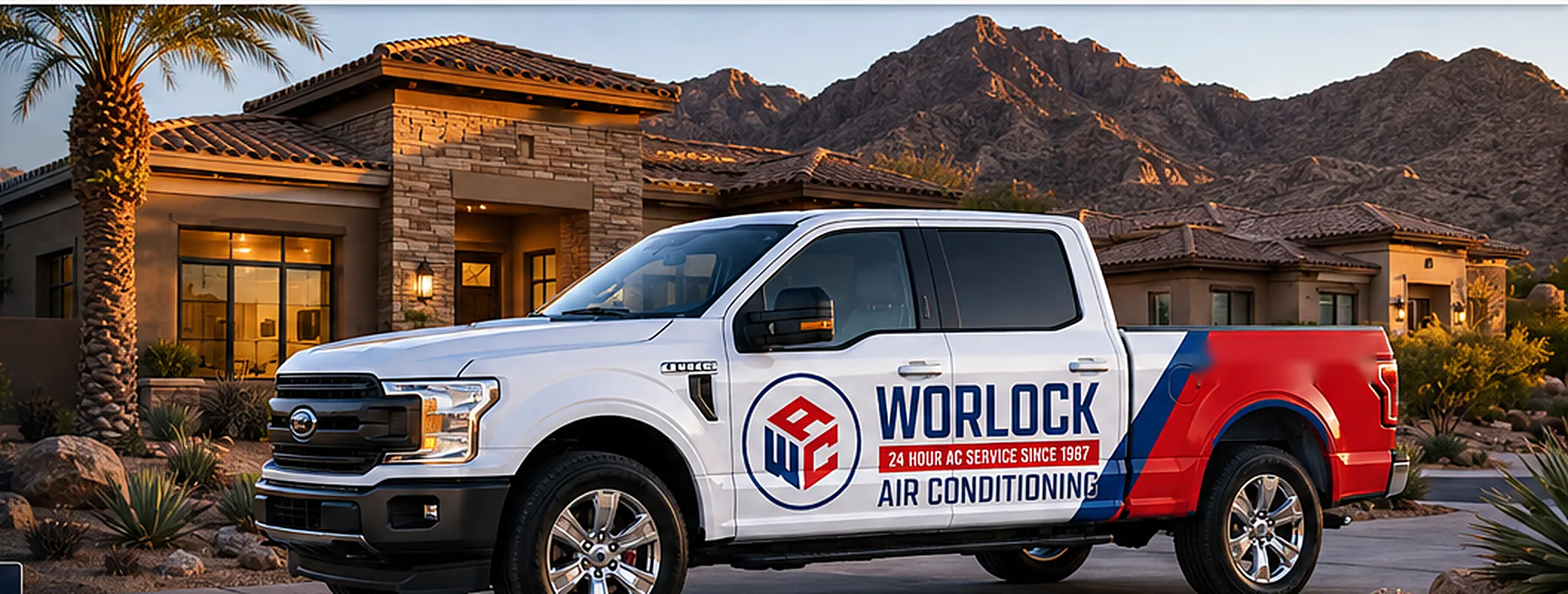
Worlock Air Conditioning & Heating has served Arizona homeowners since 1987, helping families maintain, repair, and replace residential cooling equipment.
If your AC is struggling to maintain comfort or appears to be using more energy than expected, our team can help determine whether maintenance, repair, or replacement is the appropriate next step.
Contact Worlock Air to schedule AC service.
Frequently Asked Questions
What is the cheapest way to run AC in Arizona?
Start with a comfortable but reasonable thermostat setting, clean filters, reduced solar heat gain, and appropriate maintenance. Actual savings depend on your home, system, electricity rates, and cooling habits.
Does turning my AC up during the day save money?
Raising the thermostat when your home is unoccupied can reduce cooling demand. Savings depend on how long you’re away, the temperature adjustment, and your home’s characteristics.
Is 78 degrees a good AC setting in Arizona?
For some households, 78°F is a practical starting point. The right temperature depends on comfort, health needs, indoor conditions, and household preferences.
Can a dirty AC filter increase my electric bill?
Yes. A heavily restricted filter can reduce airflow and contribute to inefficient cooling. Replacing it may help restore normal performance.
Will a new air conditioner lower my Arizona electric bill?
A properly sized, higher-efficiency replacement may reduce cooling electricity consumption compared with an older, less-efficient system. Actual savings depend on equipment, installation, weather, and usage.