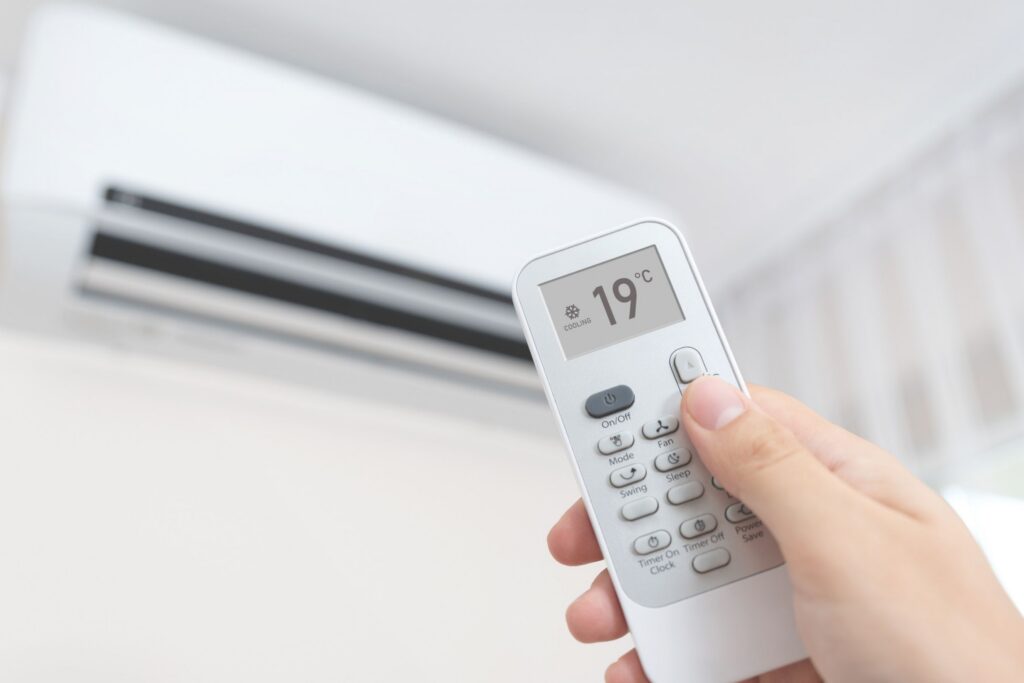
A smart thermostat can help reduce cooling costs by automatically adjusting indoor temperatures when you don’t need as much air conditioning. But buying a smart thermostat does not guarantee a lower electric bill.
The savings come from how you use it, your household schedule, and how effectively the thermostat reduces unnecessary cooling.
For Arizona homeowners, smart thermostats can be especially useful because air conditioning accounts for a significant share of household electricity consumption during the summer.
Here’s what these devices actually do, when they can save money, and when an upgrade may not be necessary.
How Does a Smart Thermostat Save Energy?
A smart thermostat controls your HVAC system based on temperature settings and, depending on the model, programmed schedules or automated features.
Instead of maintaining the same temperature throughout the day, it can adjust cooling demand around your routine.
For example, you might choose:
- A comfortable temperature while you’re home
- A higher temperature while the house is empty
- A return to your preferred setting before you arrive
- A nighttime schedule that matches your comfort needs
Reducing cooling demand during unoccupied periods can lower electricity consumption.
Is a Smart Thermostat Better Than a Programmable Thermostat?
A programmable thermostat can also save energy. The main difference is that smart thermostats often make scheduling and adjustments more convenient.
Depending on the model, smart thermostat features may include:
- Smartphone control
- Remote access
- Occupancy-based adjustments
- Automatic scheduling
- Energy-use reports
- Maintenance reminders
- Temperature alerts
These features may make it easier to maintain an energy-saving schedule.
However, a homeowner who already uses a programmable thermostat effectively may see limited additional savings from switching.
How Much Money Can a Smart Thermostat Save?
There is no universal savings percentage.
The financial benefit depends on the temperature changes the thermostat makes and how much cooling those changes avoid.
For example, a household that currently maintains a low temperature all day while everyone is at work may have more opportunity to save than a household that already uses efficient schedules.
Other factors include:
- Home insulation
- Outdoor temperatures
- Electricity rates
- Cooling equipment efficiency
- Household occupancy
- Thermostat settings
- HVAC compatibility
Be cautious of advertised savings percentages that do not explain the assumptions behind them.
What Temperature Should I Set My Smart Thermostat to in Arizona?
The best setting depends on comfort, health needs, household schedules, and the home itself.
For some households, 78°F is a reasonable summer starting point.
When the home is unoccupied, a higher setting may reduce cooling demand.
Avoid making major temperature changes without considering pets, temperature-sensitive belongings, and household circumstances.
The goal is to reduce unnecessary cooling while maintaining appropriate indoor conditions.
Can a Smart Thermostat Help With Arizona Peak-Hour Electricity Rates?
Potentially. Some Arizona utility plans charge different electricity rates depending on the time of day. A smart thermostat may help you manage cooling schedules around those periods.
However, the best strategy depends on your actual rate plan and home.
Pre-cooling a house before higher-priced hours may be useful in some situations, but it is not automatically the cheapest approach for every property.
Review your utility’s current pricing structure before creating an aggressive schedule.
Can a Smart Thermostat Make My AC More Efficient?
A thermostat does not change the fundamental efficiency rating of your air conditioner.
Instead, it can help reduce how much cooling the system is asked to provide.
If your AC has dirty coils, airflow restrictions, electrical problems, or other mechanical issues, a smart thermostat will not correct those conditions.
Professional AC maintenance remains important.
Can a Smart Thermostat Help When You’re on Vacation?
Yes. Remote temperature monitoring and scheduling can be useful for homeowners who travel frequently or leave their Arizona property vacant for extended periods.
Depending on the model, you may be able to:
- Check indoor temperature remotely
- Adjust thermostat settings
- Receive high-temperature alerts
- Monitor system operation
These features are especially helpful for seasonal Arizona residents.
However, remote monitoring should supplement appropriate property checks and maintenance, not replace them entirely.
Are Smart Thermostats Compatible With Every HVAC System?
No.
Compatibility depends on the thermostat and the HVAC equipment.
Important considerations can include:
- Conventional AC versus heat pump systems
- Heating configuration
- Number of cooling or heating stages
- Thermostat wiring
- Required power connections
- Manufacturer controls
- Communicating HVAC equipment
Some advanced HVAC systems require specific compatible controls to maintain their intended functionality.
Before purchasing a thermostat, confirm compatibility with your equipment.
Should I Install an Ecobee or Honeywell Smart Thermostat?
Both manufacturers offer thermostat options with different features and compatibility requirements.
The best choice depends on your HVAC configuration and the features you want.
Worlock has installed smart thermostat equipment as part of actual customer projects.
For example, a Goodman AC replacement in Chandler included an Ecobee thermostat, while a Carrier HVAC replacement in Scottsdale included a Honeywell Wi-Fi thermostat.
These projects illustrate how modern temperature controls can be incorporated into HVAC upgrades.
Is a Smart Thermostat Worth It if You Work From Home?
Possibly, but the energy-saving opportunity may be smaller.
If someone occupies the home throughout the day, there may be fewer hours when cooling demand can be reduced.
You may still appreciate:
- Easier scheduling
- Remote access
- Temperature monitoring
- Equipment notifications
- Improved control convenience
However, comfort and convenience may be the primary benefits rather than major electricity savings.
When Should You Upgrade Your Thermostat?
A smart thermostat may be worthwhile if:
- Your household follows a predictable schedule
- You frequently forget to adjust the temperature
- You travel regularly
- You want remote monitoring
- Your current thermostat lacks useful scheduling features
- You’re installing compatible new HVAC equipment
If your AC struggles to maintain temperature, diagnose the cooling problem before assuming a thermostat upgrade will solve it.
Worlock provides professional AC repair for homeowners experiencing cooling performance problems.
Get Help With Your Arizona HVAC Controls
Smart thermostats can be useful tools for reducing unnecessary cooling and improving temperature management.
The best results come from choosing compatible equipment and setting it up around your household’s needs.
Worlock Air Conditioning & Heating serves homeowners throughout the Phoenix Valley and can help evaluate thermostat compatibility as part of HVAC service or installation.
Contact Worlock Air to discuss your HVAC system and thermostat options.
Frequently Asked Questions
Do smart thermostats actually lower electric bills?
They can, especially when they reduce unnecessary cooling through schedules and temperature setbacks. Actual savings depend on usage and home conditions.
How much can an Ecobee thermostat save?
Savings vary by household, equipment, schedule, and utility rates. No fixed percentage applies to every Arizona home.
Are smart thermostats worth it in Phoenix?
They may be particularly useful for managing long cooling seasons, household schedules, remote monitoring, and time-of-use electricity plans.
Can a smart thermostat damage an AC?
A properly selected and installed compatible thermostat should operate according to the HVAC system’s control requirements. Incorrect wiring or incompatible controls can cause problems, so compatibility matters.
Will a smart thermostat fix an AC that runs constantly?
Not necessarily. Constant operation may be caused by extreme heat, equipment problems, airflow restrictions, sizing issues, or other conditions that require professional evaluation.