An energy-efficient air conditioner can be a worthwhile investment for Arizona homeowners, especially when replacing an aging system that operates through long, demanding summers.
However, buying the highest-efficiency model available does not automatically provide the best financial return.
The right decision depends on the cost of the upgrade, your current equipment, expected electricity consumption, installation quality, and how long you plan to own the home.
Before investing in a new AC, it helps to understand what higher efficiency actually means and how to compare the potential savings with the upfront expense.
What Makes an Air Conditioner Energy-Efficient?
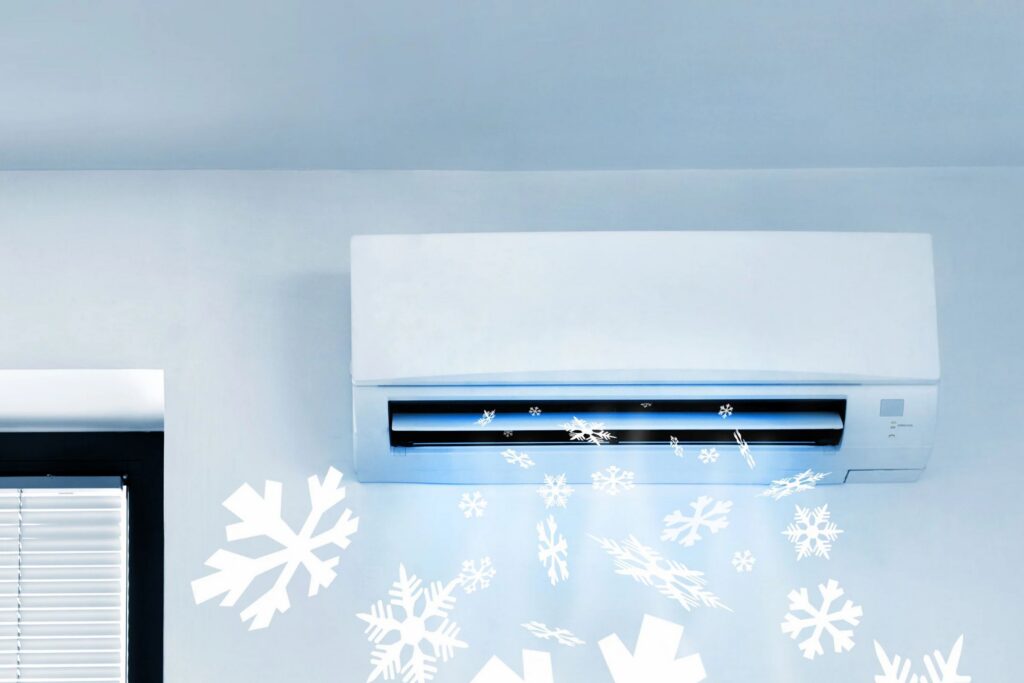
Air conditioner efficiency describes how much cooling the equipment delivers relative to the energy it consumes. Modern residential central AC equipment commonly uses SEER2 ratings to communicate seasonal cooling efficiency.
A higher SEER2 rating generally indicates greater efficiency under standardized testing conditions.
However, a rating is not a promise of a particular electric bill.
Real-world performance also depends on:
- Equipment sizing
- Installation quality
- Ductwork condition
- Thermostat settings
- Outdoor temperatures
- Home insulation
- Maintenance
- Cooling demand
A high-efficiency system installed incorrectly may not deliver the expected results.
Why AC Efficiency Matters More in Arizona
Arizona homeowners often depend on air conditioning for much of the year. During extreme heat, cooling equipment may operate for extended periods to maintain indoor comfort.
The more electricity your home uses for cooling, the more meaningful an improvement in cooling efficiency may become.
For example, a homeowner who operates their AC heavily throughout a long summer may benefit more from an efficiency upgrade than someone with relatively limited cooling needs.
That doesn’t mean every Arizona homeowner should replace a functioning system.
It means cooling usage deserves particular attention when evaluating a replacement.
How Much Can a High-Efficiency AC Save?
Savings vary considerably. You can estimate the potential financial benefit by comparing the expected annual cooling energy use of different systems.
For a simplified illustration, suppose an existing system uses $1,200 worth of electricity annually for cooling.
If a replacement reduced cooling electricity consumption by 20%, the theoretical annual savings would be approximately $240.
That is only an example, not a prediction for a particular Arizona home. Actual savings depend on equipment performance, weather, household behavior, utility rates, and installation conditions.
Also remember that your total electric bill includes more than air conditioning.
A 20% reduction in AC electricity consumption does not necessarily mean a 20% reduction in your entire household electric bill.
What Is the Difference Between SEER and SEER2?
SEER and SEER2 are seasonal cooling efficiency ratings based on different test procedures.
SEER2 was introduced with updated testing requirements intended to better reflect certain real-world operating conditions.
Because the test procedures differ, homeowners should not directly compare an older SEER number with a newer SEER2 number as if they were identical measurements.
When comparing replacement options, ask your HVAC contractor to explain the efficiency ratings for the complete equipment combinations being proposed.
Is the Highest SEER2 Rating Always Worth the Money?
Not necessarily. Higher-efficiency equipment may cost more upfront.
The financial question is whether the additional savings and other benefits justify that added expense.
For example, compare:
- The installed price of a standard-efficiency system
- The installed price of a higher-efficiency system
- Expected annual cooling energy consumption
- The difference in estimated operating costs
- Maintenance and repair considerations
- Your expected years of ownership
A homeowner planning to remain in the property for many years may evaluate the investment differently from someone planning to move soon.
How Do You Calculate the Payback Period?
A simple payback calculation divides the additional upfront cost by the estimated annual savings.
Imagine two appropriately sized AC options:
| Standard option | High-efficiency option | |
| Installed cost | $9,000 | $11,000 |
| Estimated annual cooling cost | $1,200 | $960 |
| Annual cooling savings | — | $240 |
In this hypothetical example, the higher-efficiency system costs $2,000 more and saves an estimated $240 annually.
The simple payback period is approximately 8.3 years.
This calculation does not account for financing costs, future utility-rate changes, repairs, equipment life, or the time value of money. It is a starting point for evaluating an upgrade, not a guarantee of financial return.
Does a Two-Stage or Variable-Speed AC Save More Energy?
Advanced equipment may offer additional benefits beyond its efficiency rating.
Single-Stage Systems
These typically operate at one cooling capacity when running.
Two-Stage Systems
These can operate at different cooling capacities based on demand.
Variable-Speed Systems
Certain systems can adjust operation across a broader range to better match changing cooling requirements.
Depending on the design and installation, advanced equipment may improve temperature consistency, noise levels, and efficiency.
However, the exact benefits vary by model and system configuration.
What If Your Current AC Still Works?
If your existing system operates reliably and efficiently, replacing it solely to reduce electricity consumption may not provide a strong financial return.
Before making a major purchase, consider whether lower-cost improvements could help.
These might include:
- Professional maintenance
- Airflow corrections
- Duct leakage repairs
- Thermostat adjustments
- Improved insulation
- Reduced solar heat gain
Worlock’s AC maintenance services can help identify certain equipment-related performance problems.
When Does an Energy-Efficient Replacement Make More Sense?
An upgrade becomes more compelling when the current AC has multiple problems.
These may include:
- Advanced age
- Frequent breakdowns
- Expensive upcoming repairs
- Poor cooling performance
- High operating costs
- Inconsistent indoor comfort
If replacement is already necessary, the decision changes.
Instead of comparing a new AC against keeping your existing system indefinitely, you can compare different replacement options and their operating costs.
That is often the most useful time to evaluate a higher-efficiency model.
Proper AC Sizing Is Essential
Even highly efficient equipment can perform poorly when incorrectly sized.
An oversized system may short cycle, while an undersized system may struggle to maintain comfort during peak demand.
Proper sizing should account for the home’s actual cooling load rather than relying exclusively on square footage.
Professional AC installation should include appropriate equipment selection and consideration of ductwork and home characteristics.
Can Real HVAC Case Studies Help You Compare Upgrades?
Yes. Real installation examples can help homeowners understand why specific equipment was selected and what improvements followed.
For example, Worlock completed a Goodman high-efficiency AC replacement in Chandler involving an aging Lennox system, a 17.2 SEER2 Goodman replacement, and an Ecobee thermostat.
The homeowner reported improved comfort and quieter operation.
That project illustrates the types of benefits an upgrade can provide, although measured utility savings were not available.
Should You Finance a High-Efficiency AC?
Financing may make a major replacement more manageable, but it also affects the overall cost of ownership.
Compare the total financed cost, interest charges, payment terms, and expected equipment benefits before choosing a plan.
Worlock provides information about available HVAC financing options.
Find the Right Balance Between Cost and Efficiency
The best air conditioner for your home is not necessarily the most expensive or the one with the highest published efficiency rating.
It is the system that appropriately meets your cooling needs, fits your budget, and offers reasonable long-term value.
Worlock Air Conditioning & Heating helps Arizona homeowners compare equipment options and plan professional AC replacement.
Contact Worlock Air to discuss an energy-efficient AC upgrade.
Frequently Asked Questions
Is a high-SEER2 air conditioner worth it in Arizona?
It can be, particularly for homes with high cooling demand or aging equipment. The value depends on the price difference, expected energy savings, installation, and length of ownership.
How much can a high-efficiency AC lower my electric bill?
There is no universal savings amount. Actual reductions depend on the old and new systems, cooling usage, utility rates, home characteristics, and other electricity consumption.
Is a 17 SEER2 AC better than a 15 SEER2 AC?
A higher SEER2 rating generally indicates better seasonal cooling efficiency under standardized conditions. Whether the additional efficiency justifies the price depends on the installed cost and expected usage.
Should I replace my AC just to save electricity?
Not automatically. If your existing system is reliable and operating efficiently, the financial return may not justify immediate replacement.
What matters more, AC efficiency or installation quality?
Both matter. A high-efficiency system still needs appropriate sizing, compatible equipment, correct installation, and adequate airflow to perform as intended.