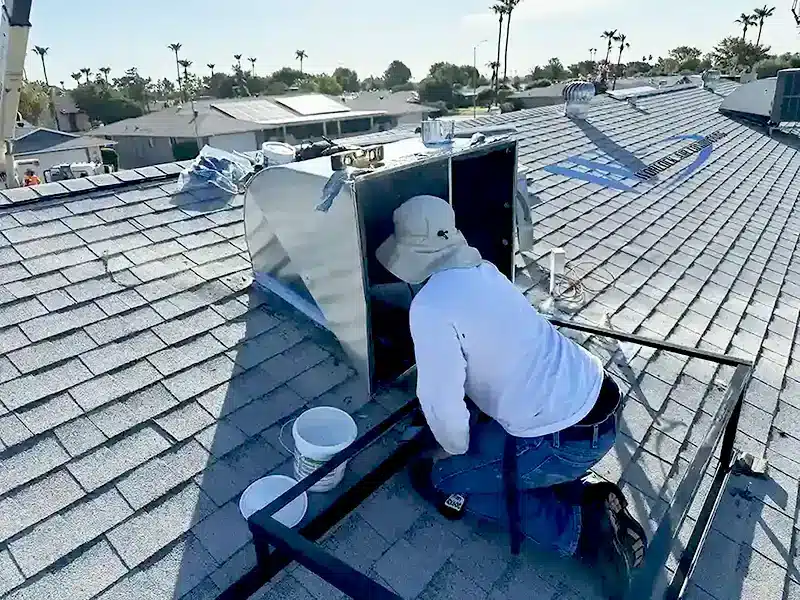
Rooftop AC units are one of the most recognizable features of Arizona homes. While homeowners from other parts of the country may find them unusual, rooftop air conditioners have been widely used across Arizona for decades.
But are rooftop HVAC systems actually better for desert climates?
The answer depends on your home design, maintenance habits, and cooling needs. In this guide, we’ll break down the advantages and disadvantages of rooftop AC units in Arizona, explain how they work, and share maintenance tips that can help homeowners avoid costly breakdowns during extreme summer heat.
Why Arizona Homes Use Rooftop HVAC Systems
Arizona’s climate and housing styles make rooftop package units a practical option for many homes.
Unlike split HVAC systems, rooftop package units combine all major heating and cooling components into a single cabinet mounted on the roof.
This setup became popular because:
- Many Arizona homes are built on slab foundations
- Yard space is often limited
- Rooftop systems simplify installation
- Ductwork layouts can be more efficient
- Ground-level equipment stays out of the way
Today, rooftop air conditioners remain common throughout Phoenix and surrounding Arizona communities.
Pros of Rooftop AC Units in Arizona
Saves Outdoor Space
One major benefit of rooftop HVAC systems is preserving ground-level space.
This allows homeowners to maximize:
- Patios
- Pool areas
- Landscaping
- Side yards
- Outdoor entertainment areas
Keeps Equipment Away From Ground Debris
Arizona’s desert climate produces large amounts of dust and debris. Rooftop placement helps protect HVAC equipment from:
- Dirt accumulation
- Grass clippings
- Flooding
- Mud during monsoon storms
Reduces Noise Near Living Areas
Because rooftop package units are elevated, operational noise is often less noticeable near windows and outdoor seating areas.
Simplified Installation for Certain Homes
For single-story homes, rooftop systems can allow for shorter duct runs and more centralized airflow distribution.
Cons of Rooftop HVAC Systems
Extreme Heat Exposure
Arizona roofs experience intense temperatures during summer months. Constant UV exposure and heat can place additional strain on HVAC components.
Maintenance Access Can Be Difficult
Routine maintenance and repairs require safe roof access. Homeowners should avoid attempting rooftop HVAC repairs themselves.
Professional AC maintenance services are strongly recommended.
Roof Leak Risks
Improper installation or aging seals around rooftop units can occasionally contribute to roof leaks if not properly maintained.
Potential Energy Loss
Poorly insulated rooftop ductwork can lose cooling efficiency during extreme heat if not properly sealed and maintained.
How to Maintain a Rooftop AC Unit in Arizona
Regular maintenance is essential for Arizona rooftop HVAC systems because cooling systems often operate for much of the year.
Change Air Filters Regularly
Dirty filters reduce airflow and force the system to work harder.
Arizona homeowners should typically replace filters:
- Every 1–3 months
- More frequently during dusty seasons
- More often in homes with pets
Schedule Professional HVAC Inspections
Routine inspections help identify problems before they become expensive repairs.
Technicians can inspect:
- Refrigerant levels
- Electrical components
- Condenser coils
- Drain lines
- Blower motors
- Duct connections
Professional air conditioning services help improve system efficiency and reliability.
Keep the Roof Area Clear
Leaves, debris, and dust buildup around rooftop units can restrict airflow and reduce efficiency.
Watch for Warning Signs
Call an HVAC professional if you notice:
- Weak airflow
- Warm air
- Rising energy bills
- Unusual noises
- Frequent cycling
- Uneven cooling
How Long Do Rooftop AC Units Last in Arizona?
Most rooftop HVAC systems in Arizona last between 10 and 15 years depending on:
- Maintenance quality
- System size
- Installation quality
- Usage demands
- Exposure conditions
Because Arizona heat is extremely demanding on HVAC equipment, preventive maintenance plays a major role in system lifespan.
Are Rooftop AC Units Right for Every Home?
Not always.
Some homeowners may benefit more from split systems depending on:
- Home layout
- Roof structure
- Energy goals
- Existing ductwork
- Budget
An experienced HVAC contractor can help determine the best setup for your property.
Trust Arizona HVAC Professionals for Rooftop AC Service
Arizona summers place enormous stress on HVAC systems. Whether you need seasonal maintenance, emergency repairs, or a full replacement, working with experienced local professionals is essential.
The team at Worlock Air Conditioning & Heating provides dependable HVAC solutions designed for Arizona homeowners and desert climates.
FAQ: Rooftop HVAC Systems in Arizona
Why are rooftop AC units popular in Arizona?
Rooftop HVAC systems help save space, simplify installation, and work well with Arizona’s common slab-foundation home designs.
Do rooftop air conditioners work better in hot climates?
They can perform very efficiently when properly sized and maintained, though efficiency depends more on the system itself than roof placement alone.
How often should rooftop AC units be serviced?
Most Arizona HVAC professionals recommend servicing rooftop systems at least twice per year.
Are rooftop package units more expensive?
Costs vary depending on the system size, efficiency rating, and installation complexity.
Can rooftop AC units leak into the home?
Improper installation or aging roof seals can occasionally cause leaks, which is why regular inspections are important.