If you’re shopping for a new HVAC system in Arizona, you may be wondering whether rooftop air conditioners are actually better for desert homes.
The truth is that rooftop HVAC systems offer several advantages in Arizona’s climate, but they are not automatically the best choice for every property. Factors like home layout, roof design, energy efficiency goals, and maintenance needs all play a role.
In this guide, we’ll explain how rooftop air conditioners work, why they’re so common in Arizona, and whether they may be the right option for your home.
Why Rooftop Air Conditioners Are Common in Arizona
Arizona homes often use rooftop package units because of the way many homes are designed.
Unlike homes in colder climates with basements or large utility spaces, many Arizona homes are built on slab foundations with limited indoor mechanical room.
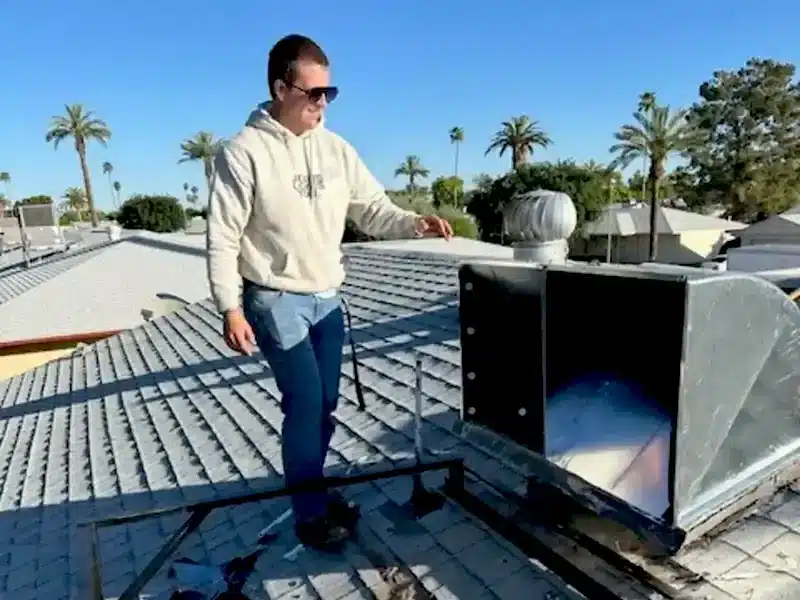
Rooftop HVAC systems solve this problem by placing the entire heating and cooling system on the roof.
This setup became popular because it:
- Saves outdoor ground space
- Simplifies installation
- Keeps equipment away from dirt and flooding
- Works well with flat or low-slope roofs
- Allows efficient airflow in many single-story homes
Today, rooftop AC systems remain extremely common throughout Phoenix and surrounding Arizona communities.
What Is a Rooftop Package Unit?
A rooftop package unit combines all HVAC components into one outdoor cabinet.
This typically includes:
- Compressor
- Condenser coil
- Evaporator coil
- Blower motor
- Air handler
Traditional split systems separate indoor and outdoor components, while rooftop package units house everything together.
Homeowners considering system upgrades can explore professional air conditioning services to compare options.
Advantages of Rooftop Air Conditioners in Arizona
Better Use of Outdoor Space
Rooftop systems free up yard space that would otherwise be occupied by ground-mounted equipment.
This is especially useful for:
- Smaller lots
- Pool areas
- Outdoor kitchens
- Patios
- Landscaping projects
Reduced Ground-Level Debris Exposure
Arizona’s dusty environment can affect HVAC systems installed at ground level.
Roof-mounted systems are less exposed to:
- Dirt
- Mud
- Landscaping debris
- Standing water
Less Noise Around the Home
Because rooftop units are elevated, homeowners often notice less HVAC noise near windows and entertainment areas.
Simplified Duct Layouts
In some homes, rooftop placement allows shorter duct runs and more centralized airflow.
Potential Drawbacks of Rooftop HVAC Systems
Intense Heat Exposure
Arizona roofs experience extremely high temperatures during summer. Constant exposure to heat and sunlight can increase wear on HVAC components over time.
Maintenance Access Challenges
Routine inspections and repairs require roof access, making professional service especially important.
Scheduling regular AC maintenance helps reduce the risk of emergency breakdowns.
Roof Leak Concerns
Improper installation or deteriorating roof seals around rooftop units can occasionally lead to leaks if not properly maintained.
Are Rooftop Air Conditioners More Efficient?
Not necessarily.
Efficiency depends more on:
- System age
- SEER rating
- Proper installation
- Correct sizing
- Maintenance quality
A modern rooftop package unit can perform very efficiently in Arizona when installed correctly.
Older systems, however, may struggle during periods of prolonged extreme heat.
Should You Choose a Rooftop HVAC System?
A rooftop air conditioner may be a good choice if:
- Your home already has a rooftop unit
- You want to save outdoor space
- Your roof structure supports installation
- Your home layout benefits from rooftop ductwork
A split system may be better if:
- Roof access is difficult
- You want easier maintenance access
- You’re planning major energy-efficiency upgrades
- Your home has indoor mechanical space available
An experienced HVAC professional can help determine the best option for your property.
Signs It May Be Time to Replace Your Rooftop AC Unit
You may want to consider replacement if your system:
- Is over 10–15 years old
- Requires frequent repairs
- Struggles to cool the home
- Causes rising energy bills
- Makes unusual noises
- Cycles constantly during summer
Replacing an aging HVAC system can improve comfort, efficiency, and reliability during Arizona’s hottest months.
Work With Arizona HVAC Experts
Whether you need rooftop HVAC maintenance, repairs, or a complete replacement, working with experienced Arizona professionals is essential.
The team at Worlock Air Conditioning & Heating provides reliable HVAC solutions tailored to Arizona homes and extreme desert conditions.
FAQ: Rooftop Air Conditioners in Arizona
Are rooftop AC units better in Arizona?
They can be an excellent option for many Arizona homes because they save space and work well with local home designs, though they are not ideal for every property.
Why do Arizona homes use rooftop HVAC systems?
Many Arizona homes are built on slab foundations with limited indoor utility space, making rooftop installation practical.
Are rooftop air conditioners harder to maintain?
They can be slightly more difficult to access, which is why professional maintenance is recommended.
How long do rooftop AC units last in Arizona?
Most rooftop HVAC systems last between 10 and 15 years depending on maintenance and usage.
Should I replace my rooftop package unit with a split system?
That depends on your home layout, budget, efficiency goals, and existing HVAC setup. An HVAC professional can help you compare options.