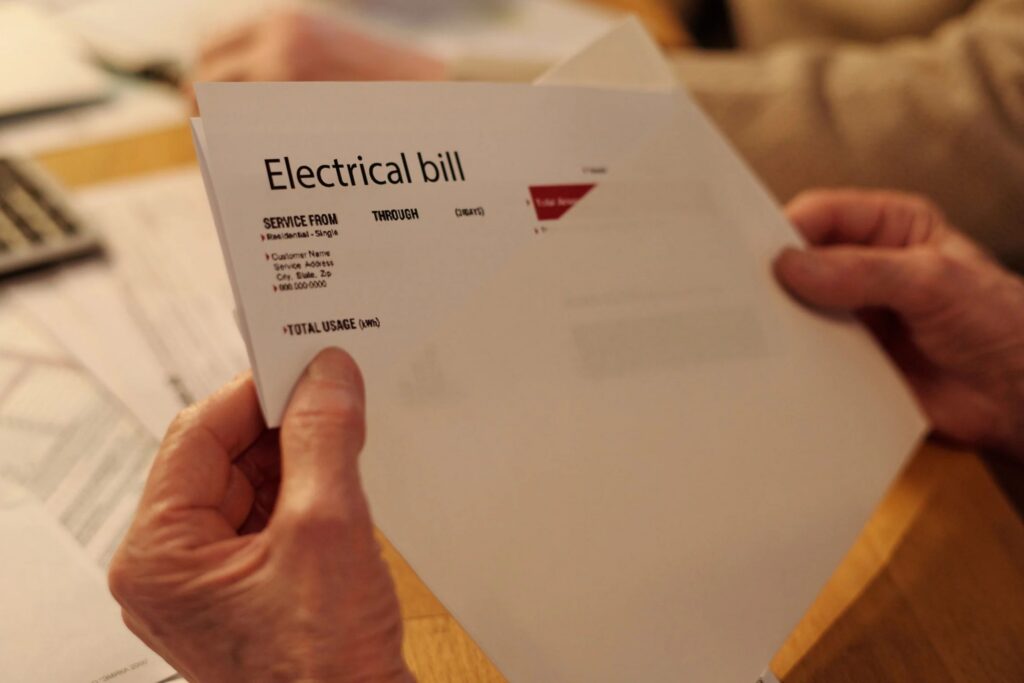
Your air conditioner is cooling the house, the thermostat seems normal, and nothing appears broken. Then your electric bill arrives.
If the amount is substantially higher than expected, it’s reasonable to wonder whether your AC is using too much electricity.
The answer may involve the air conditioner, but not always.
Arizona electric bills are affected by outdoor temperatures, cooling demand, electricity rates, household usage, and the condition of your HVAC system.
A functioning air conditioner can also operate inefficiently without displaying an obvious failure.
Here’s how to narrow down the possible causes before paying for unnecessary repairs or replacing equipment that may still be in good condition.
Does a High Electric Bill Mean My AC Is Broken?
No. A high electric bill alone does not prove an HVAC malfunction.
Consider whether anything has changed recently:
- Outdoor temperatures
- Number of people at home
- Thermostat settings
- Electricity rates
- Billing period
- Pool equipment operation
- Electric vehicle charging
- Appliance usage
- Home renovations
- HVAC operating hours
These factors can increase electricity costs even when your AC is functioning normally.
The key is separating increased electricity consumption from increased electricity prices.
1. Arizona Heat Is Making Your AC Run Longer
When outdoor temperatures remain high, your home gains heat throughout the day.
Your AC must remove that heat to maintain indoor comfort.
During especially hot periods, longer cooling cycles may be normal.
However, the system should still maintain reasonable indoor temperatures for its design and operating conditions.
If the AC runs for extended periods while indoor temperatures continue rising, a performance problem may be developing.
2. Your Electricity Rate Has Changed
Your final electric bill reflects both electricity consumption and the rate you’re charged.
Some Arizona utility plans have different prices depending on the time of day or season.
Demand-based charges may also apply to certain plans.
Before blaming your AC, review:
- Total kilowatt-hours used
- Billing dates
- Current rate plan
- Peak-hour charges
- Demand charges, if applicable
- Changes from previous billing periods
A higher dollar amount does not always mean the home used proportionally more electricity.
3. Your Thermostat Is Set Lower Than Before
A small thermostat change can affect cooling demand over a long Arizona summer.
For example, maintaining 72°F instead of 78°F generally requires more cooling under otherwise comparable conditions.
Review your thermostat schedule and any recent adjustments.
If the household is frequently away, a reasonable temperature setback may help reduce unnecessary cooling.
4. Your Air Filter Is Dirty
Restricted airflow can reduce cooling performance and contribute to unnecessary equipment strain.
Inspect your air filter and replace it when appropriate.
If airflow remains weak after a filter change, another problem may be present.
5. Your AC Coils Need Attention
Dirty indoor or outdoor coils can interfere with heat transfer.
This may reduce efficiency and affect cooling performance.
Professional AC maintenance can help determine whether cleaning or other service is necessary.
6. Your Ductwork Is Losing Conditioned Air
Leaking or disconnected ducts can waste cooled air before it reaches your living spaces.
This is especially concerning when ducts run through hot Arizona attics.
Possible clues include:
- Rooms that never cool properly
- Weak airflow at certain vents
- Long operating cycles
- Inconsistent temperatures
- Unexplained cooling costs
Learn more in our guide to how leaky air ducts affect energy bills.
7. Your AC Has a Developing Mechanical Problem
Some equipment problems reduce performance before causing a complete breakdown.
Potential concerns include:
- Blower problems
- Refrigerant-system issues
- Electrical component problems
- Dirty equipment
- Compressor-related issues
- Other mechanical faults
A professional evaluation can help determine whether the system is operating as intended.
Worlock provides AC repair throughout the Phoenix Valley.
8. Your Home Is Gaining More Heat Than Expected
Your air conditioner may be functioning properly while the house itself is difficult to cool.
Possible causes include:
- Poor attic insulation
- Air leakage
- Large sun-exposed windows
- Inadequate shading
- Heat-producing appliances
- Changes to the home
Improving the building envelope can reduce cooling demand without replacing the air conditioner.
9. Your AC Is Older and Less Efficient
An older system may use more electricity to provide the same cooling output as newer, higher-efficiency equipment.
Age alone does not prove inefficiency, and not every old AC needs immediate replacement.
However, if high electricity use accompanies poor cooling, repeated repairs, and declining reliability, replacement may deserve consideration.
Worlock offers AC replacement for homeowners evaluating long-term equipment options.
10. Another Appliance Is Responsible
Your AC may be the largest summer electricity user, but it is not the only one.
Other potential contributors include:
- Pool pumps
- Electric water heaters
- Clothes dryers
- Refrigerators or freezers with operating problems
- Electric vehicle charging
- Additional cooling equipment
- Dehumidifiers
- Other high-consumption appliances
Check whether household electricity usage changed before assuming the air conditioner is responsible.
How Can I Tell if My AC Is Using Too Much Electricity?
Start by reviewing your utility data.
Compare Kilowatt-Hours, Not Just Dollars
A bill can rise because electricity rates have changed.
Compare actual consumption whenever possible.
Compare Similar Weather Periods
An extremely hot month will naturally involve different cooling demands than a mild one.
Review Thermostat Settings
Check whether your preferred indoor temperature or schedule has changed.
Look for HVAC Performance Changes
Pay attention to weak airflow, longer cycles, uneven temperatures, and unusual equipment noises.
Schedule Professional Diagnosis When Necessary
If electricity consumption has increased substantially without an obvious explanation, an HVAC evaluation may help identify equipment-related problems.
Should I Repair or Replace My AC to Lower My Bill?
Start with diagnosis.
A dirty coil, airflow problem, or repairable component failure may be responsible.
Replacing the entire system without investigating the cause can lead to unnecessary expense.
However, if the equipment is old, inefficient, and increasingly unreliable, a new system may offer better long-term value.
Compare the full installation cost with realistic operating savings, expected equipment life, and repair needs.
Worlock also provides HVAC financing information for homeowners considering major equipment upgrades.
What Should I Do First About a High Electric Bill?
Use this simple order:
- Review your electricity usage and rate plan.
- Compare the weather with previous billing periods.
- Check thermostat settings.
- Inspect the air filter.
- Look for obvious airflow or cooling problems.
- Consider other household electricity users.
- Schedule professional HVAC evaluation if the cause remains unclear.
This approach helps avoid spending money on repairs or equipment before identifying the real issue.
Find Out Whether Your AC Is Wasting Electricity
A high electric bill can be frustrating, especially during an Arizona summer.
But the right solution depends on the cause.
Worlock Air Conditioning & Heating has served Arizona homeowners since 1987, providing cooling system maintenance, repair, and replacement throughout Peoria, Phoenix, Scottsdale, Glendale, Surprise, Sun City, Sun City West, Youngtown, El Mirage, Litchfield Park, and surrounding communities.
Contact Worlock Air to schedule an AC performance evaluation.
Frequently Asked Questions
Why is my electric bill suddenly so high in Arizona?
Possible causes include hotter weather, longer AC operation, electricity rate changes, thermostat adjustments, appliance usage, or an HVAC efficiency problem.
Can an AC still cool while using too much electricity?
Yes. An air conditioner can continue producing cool air while operating inefficiently because of airflow restrictions, dirty equipment, or other performance issues.
How do I know if my AC is causing a high electric bill?
Compare electricity consumption, weather, thermostat settings, and household usage. An HVAC technician can evaluate equipment performance if the cause remains unclear.
Will changing my AC filter lower my electric bill?
Replacing a heavily restricted filter can help restore airflow and normal operation. The amount of energy saved depends on how severely airflow was affected.
Should I replace my AC because my electric bill is high?
Not based on the bill alone. First identify whether the increase comes from cooling demand, electricity rates, equipment problems, or other household energy use.